Hidden Hills, Agoura Hills
Roller Replacement for Hidden Hills' Early-1970s Doors
Hidden Hills homes date mostly to 1973, a decade earlier than the wider Agoura Hills area median of 1980 - original steel rollers are common here and due.
Getting It Booked In
We run this job out of Agoura Hills, about 6 miles from Hidden Hills, so there's no local branch to call - just a truck that comes over when you need it.
Confirming existing hardware
Hidden Hills is a small pocket, roughly 651 households, and most of those sit on garage door hardware that's never been swapped since the house went up. That makes roller calls here less about guessing and more about confirming what we already expect to find before we leave the shop.
Symptoms to share
Tell us the door's age when you call and whether it's binding, grinding, or jumping track - that's enough to load the right rollers before we're on site.
Proactive roller replacement
Across the wider service area the median household income runs near $153,444, but Hidden Hills sits well above that, over $250,001, and we've found that owners here tend to replace rollers before a cable snaps rather than wait for the failure. Booking ahead of a full jam saves a trip and saves the track.
What You Are Seeing
The median year built in Hidden Hills is 1973 - a decade earlier than the 1980 median across the broader area, where stock mostly runs 1967 to 1999.
Steel-on-steel groove wear
That earlier build year matters because a door installed in the early 1970s almost certainly still carries its original galvanized steel rollers on steel stems, not the nylon rollers that became standard later. Steel-on-steel wears a groove into the track over years of travel, and once that groove deepens, the door rides rough even with a fresh roller dropped in.
Rhythmic squeak and hesitation
What you notice first is usually a rhythmic squeak that gets louder, then a door that hesitates at the same spot on every open. Some owners assume it's the opener. It's almost always the roller and the track it's worn into.
Original hinges and drum
On a door this old, the roller is rarely the only original part still in service - the hinges and the drum are often just as untouched, which is worth checking in the same visit rather than coming back for it later.
What the Repair Takes
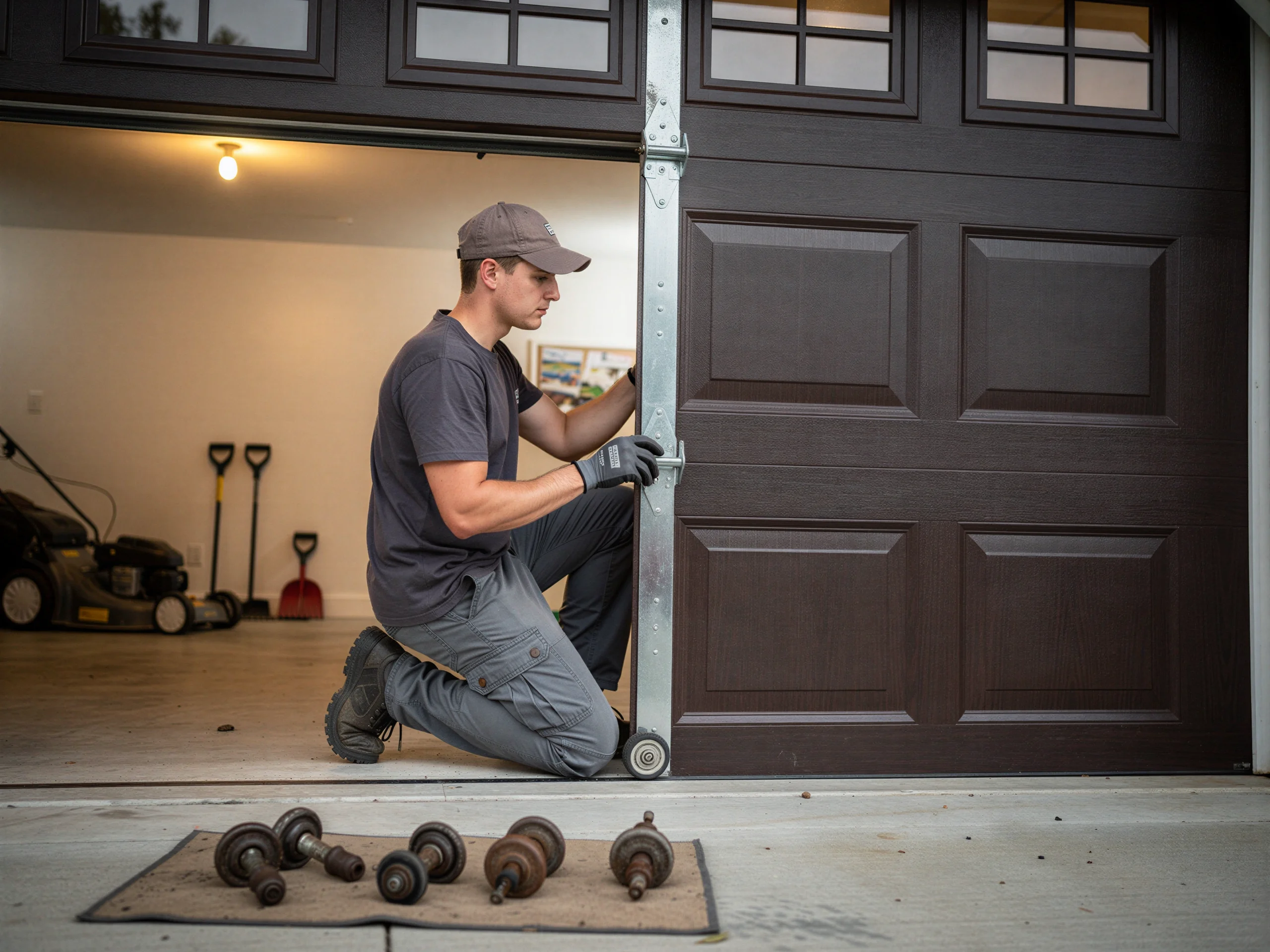
Pulling worn rollers off a door built before 1980 isn't hard, but the stems can be seized into the hinge knuckle after decades without lubrication, especially if the door's never had a service call. We loosen the track brackets, ease the roller stem free without forcing the hinge, and check the track itself for the wear groove mentioned above - if the groove is shallow, a new roller rides fine; if it's deep, the track needs truing or replacing or the new roller wears unevenly within a year. We check both sides, not just the one that's squeaking, because a door this old usually wears both tracks close to evenly. Mild winters here mean we're not fighting ice or frozen grease like a colder climate would need, so the job is mostly mechanical - no thawing, no rust scaling off in sheets. We lubricate the new rollers and hinges before buttoning the door back up, which is the maintenance step that likely never happened the first fifty years.
What Is on the Truck
We carry both nylon and steel rollers, because which one goes back on depends on what's already there and what the track can take. Nylon rollers run quieter and don't groove the track the way steel does, which is usually the upgrade we recommend on a door built in the early 1970s that's shown us a worn track. We stock rollers in the stem lengths that fit that era's hardware, along with replacement hinges, since a worn roller on an original door often means a worn hinge knuckle sitting right next to it. We don't carry every obscure stem length ever made - if a door's track hardware is a nonstandard size from a builder that's long out of business, that part may need to be special-ordered, and we'll tell you that on site rather than guess and come back twice.
The Complications
The complication on a door this age usually isn't the roller - it's everything the roller has been quietly wearing against for fifty years. A deep groove in the track means the new roller will wear fast no matter how good it is, so we flag track replacement rather than sell a roller job that won't hold.
Bent track versus groove
Bent track from a door that's been struck once, even lightly, shows up the same way a worn groove does, and only one of those two problems is fixed by a roller.
Unlubricated hinges slow removal
Mild temperate weather here means we're rarely dealing with rust-frozen hardware, but we do sometimes find hinges that have never been lubricated since installation, which makes removal slower than the job should be.
Strained opener from rollers
If the opener has been compensating for rough rollers by running harder than it should, that's worth a separate look - a new roller won't fix a strained opener, and we'll say so instead of letting you think it did.
What It Costs
We don't post a flat roller price here because the real cost driver on a 1973-era door is whether the track comes along for the ride - a clean roller swap and a roller-plus-track job are two different bills, and we won't know which one you need until we've had the door open. What we can say is that houses at this build age, across the dozen-plus pockets in this service area that share the 1980s-and-90s stock pattern, tend to need the same short list: rollers, hinges, maybe a track straightening. We price the visit once we've seen the groove and the hinge wear, not before, because quoting blind on hardware this old is how you end up back on site for a second trip.
Questions
Common questions
Is my garage door roller original if the house was built in 1973?
Very likely, yes. Hidden Hills' median build year is 1973, and rollers aren't something builders or most owners replace proactively. If the door's never had a service call, the rollers and the hinges holding them are almost certainly original steel, and the track has been wearing against them the whole time.
Why does my door squeak at the same spot every time?
That's usually a worn groove in the track lining up with the roller's travel path - common on original 1970s-era hardware. A new roller alone may quiet it briefly, but if the groove is deep the squeak comes back as the new roller settles into the same wear pattern.
Do you carry parts for older roller stems?
We stock the common stem lengths used in houses from this build era, plus matching hinges. Some builder-specific hardware from that period isn't a stocked size, and in that case we'll tell you on site rather than guess, since ordering a wrong-fit part just means a second visit.
Explore more
More Services in Hidden Hills
Cable Repair
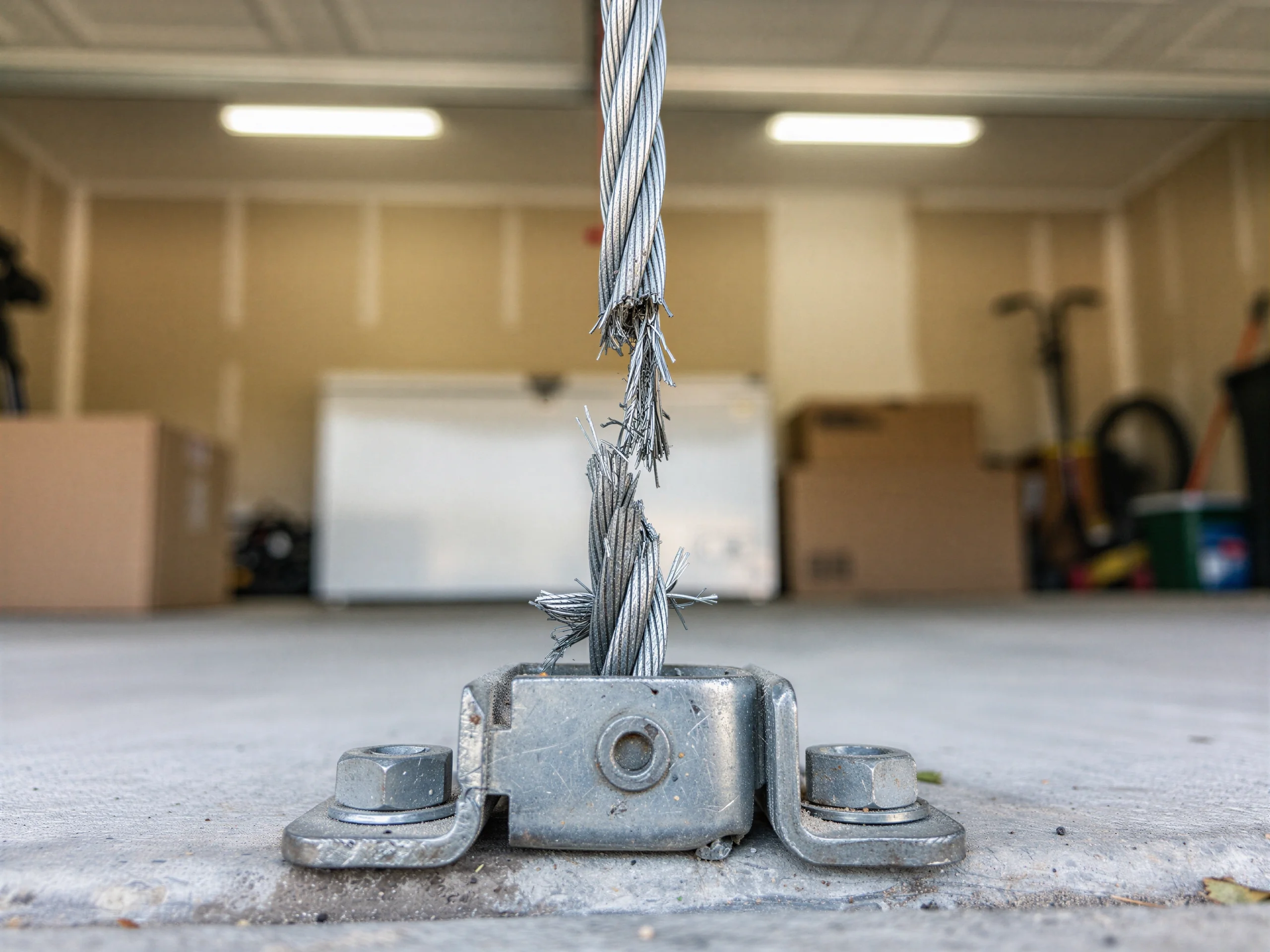
Snapped or frayed garage door cable in Hidden Hills? Learn more →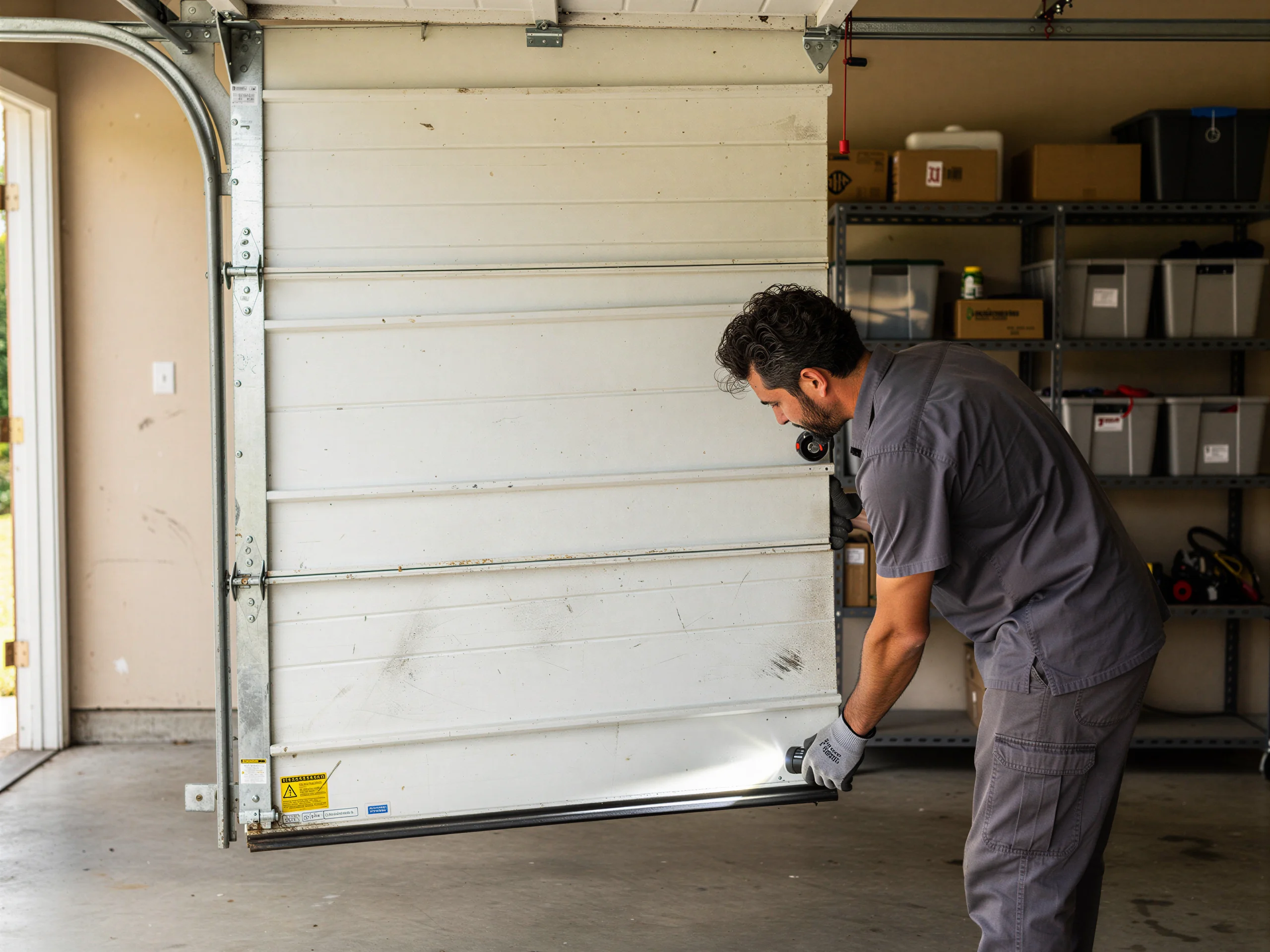
Garage Door Repair
Hidden Hills homes mostly went up around 1973, earlier than much of the surrounding area. Learn more →
Garage Door Service
Garage door repair and tune-ups for Hidden Hills homes built mostly in the early 1970s. Learn more →
Maintenance
Hidden Hills homes date to around 1973, older than the 1980 median across our service area. Learn more →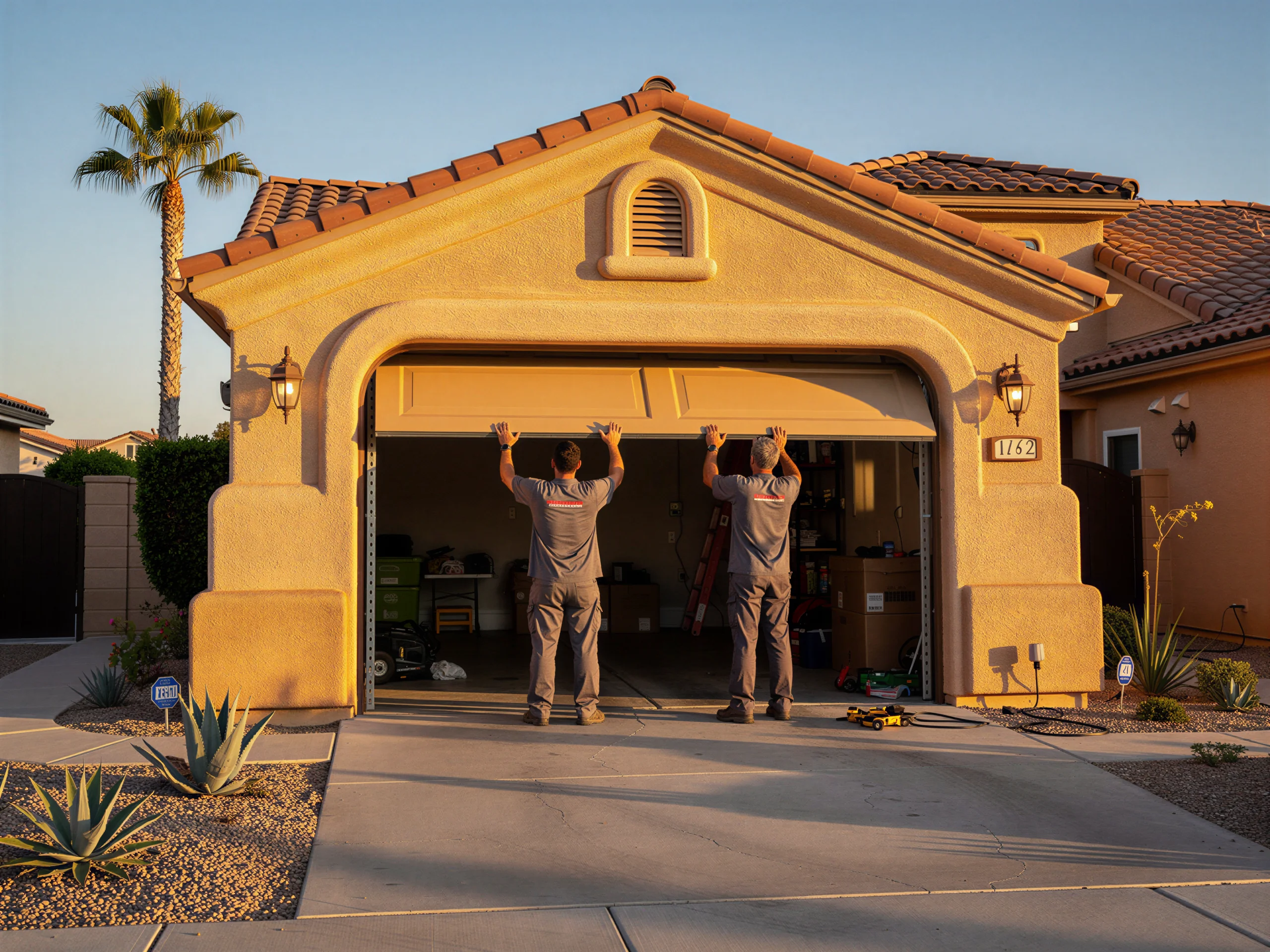
New Door Installation
Hidden Hills has about 651 households and a housing stock that mostly dates to 1973. Learn more →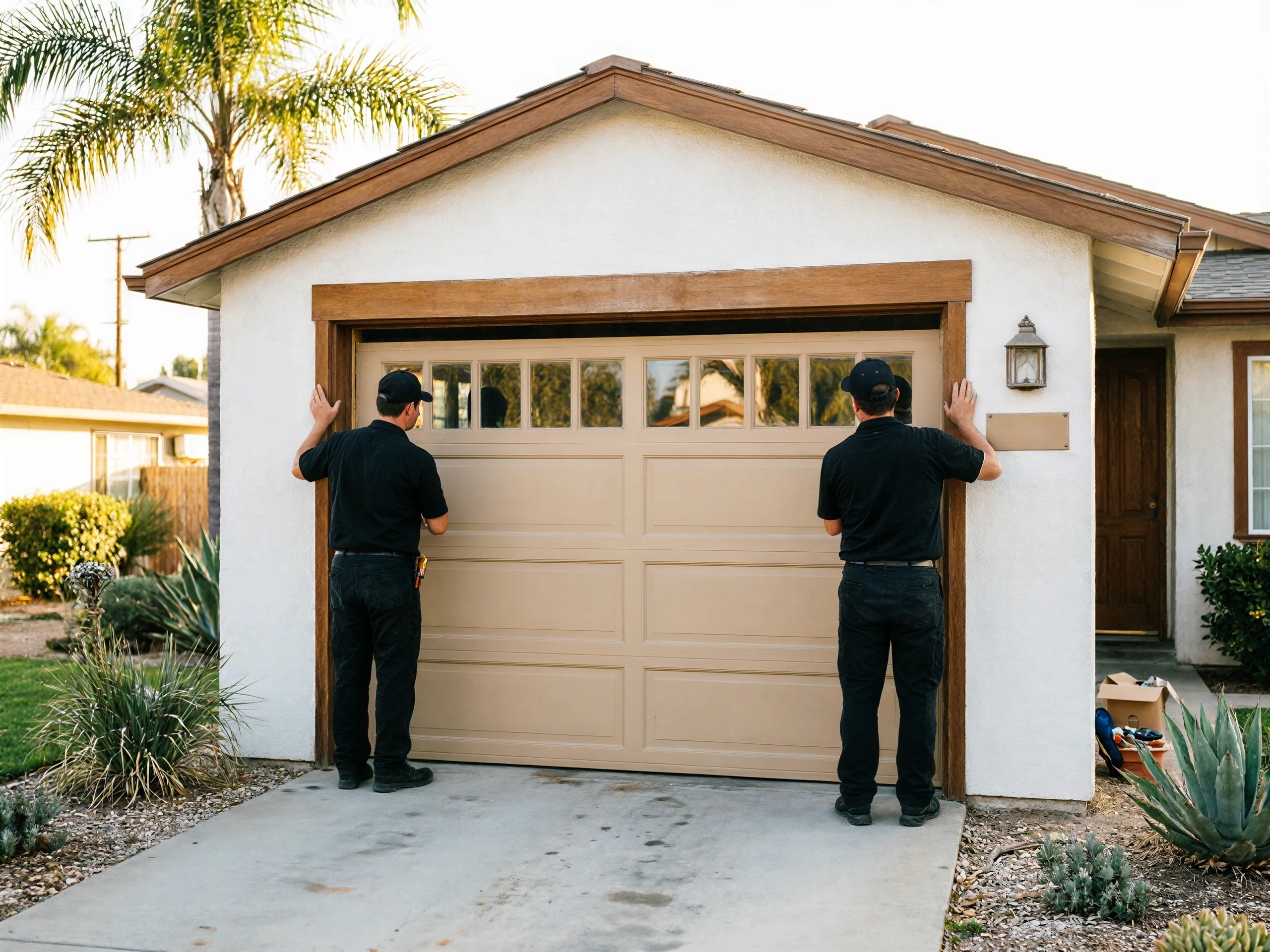
Panel Replacement
Hidden Hills homes mostly went up in 1973, years before most of the area's 1980s-90s stock. Learn more →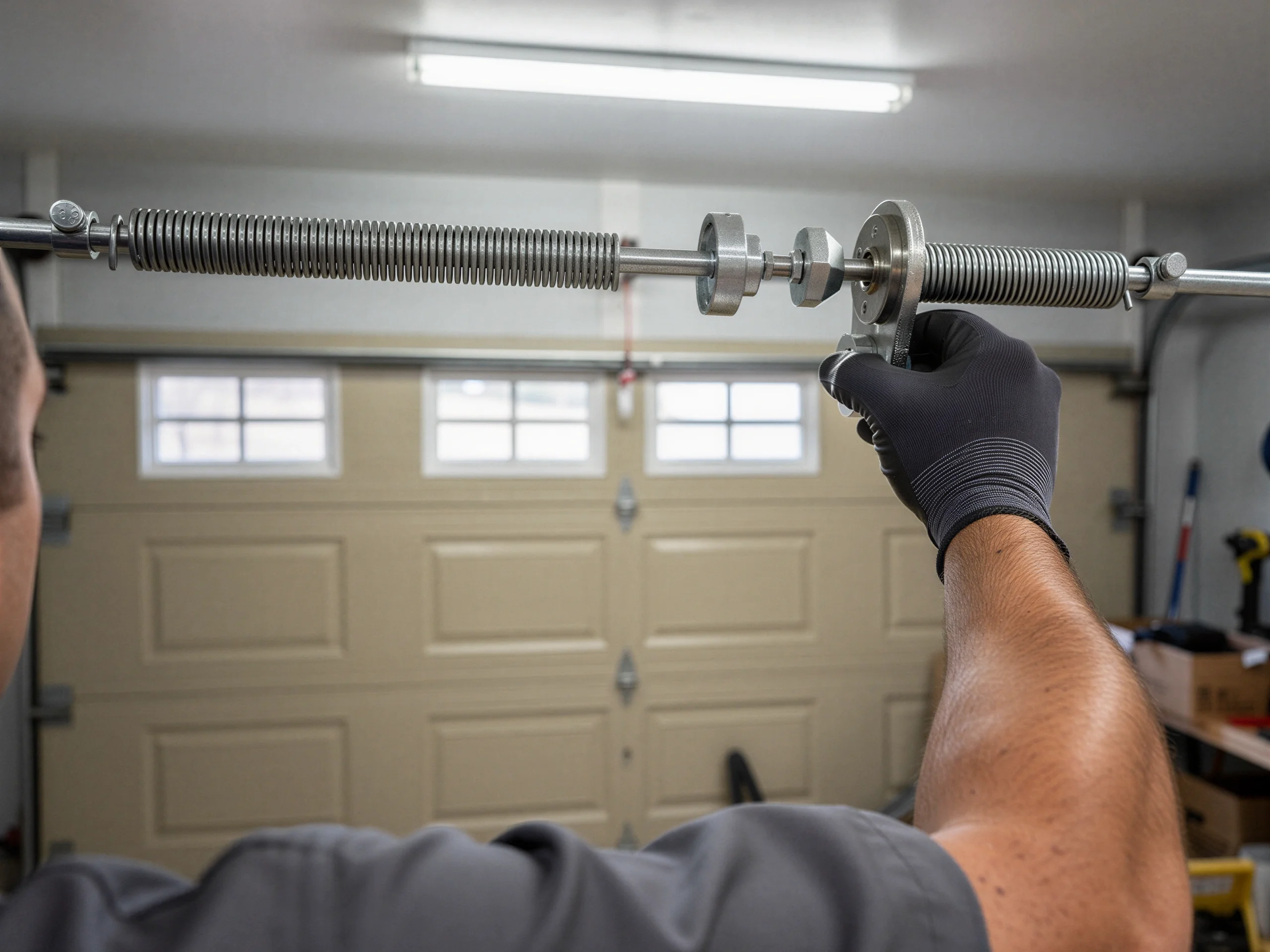
Spring Repair
Spring repair for Hidden Hills homes built around 1973, serviced from six miles away in Agoura Hills. Learn more →Ready when you are
Noisy or worn garage door rollers in Hidden Hills?
Agoura Hills Garage Door Pros repairs and installs garage doors, springs and openers in Agoura Hills, CA and the surrounding area.