Local detail
When to Call Someone
If your door won't lift, or it lifts a few inches and stops, and you hear a bang from the garage sometime before that - that's a broken torsion spring, not an opener problem. Don't keep hitting the button. The opener will try to force the door against a dead spring and burn out the motor or strip the gears, and now you've got two repairs instead of one.
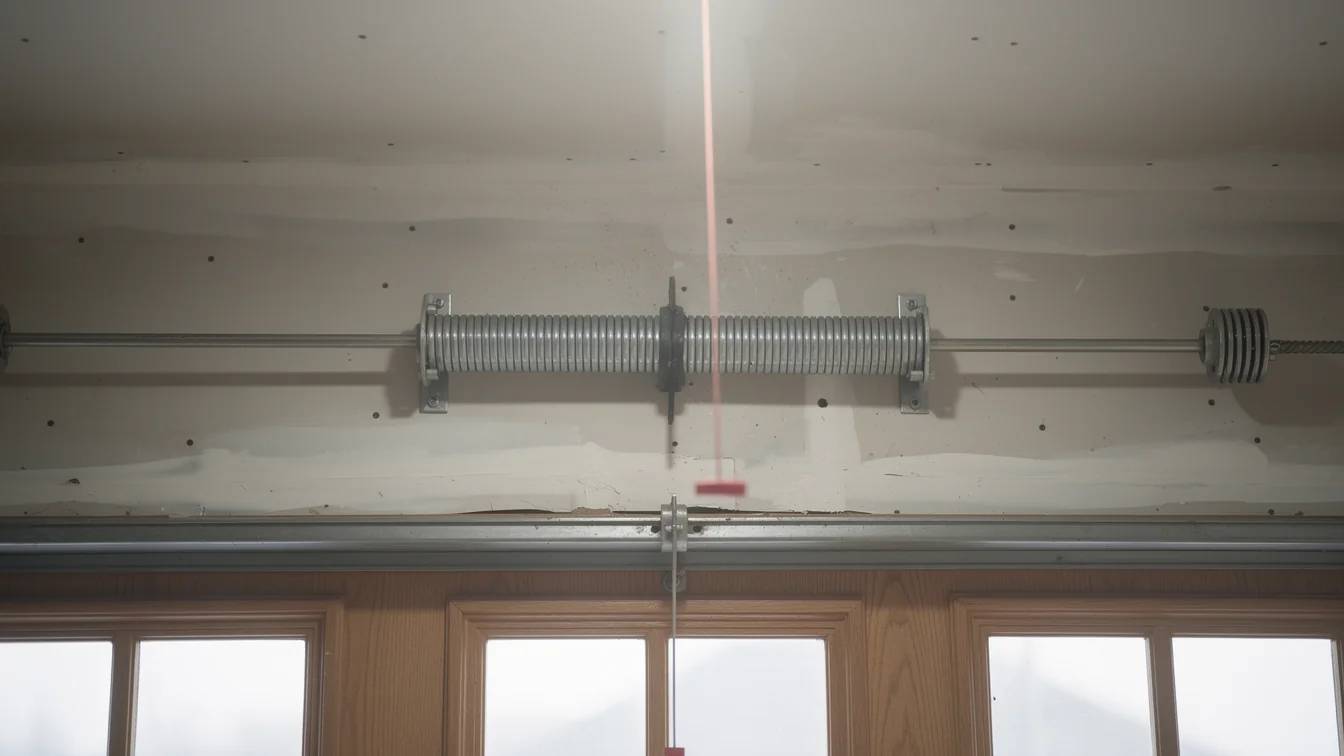
A door that's heavy to lift by hand, one that slams down instead of lowering smooth, or a spring with a visible gap in the coil - any of those means stop using the door and call. This isn't a DIY repair. A wound torsion spring under tension can break bones if it lets go while you're working on it.
One thing I'll say plainly: if your spring snapped and the door is sagging unevenly, or the cables look frayed too, that's not a quick fix. Sometimes the honest answer is that fixing the spring exposes a worn cable or a bent track that should've been dealt with at the same time, and the job runs longer than a single spring swap. Better to hear that upfront than get a surprise mid-job.
The area
The Seasonal Bit
Agoura Hills sits in a mild temperate band, which means we don't get the hard freeze-thaw cycle that snaps springs in places with real winters. That's the good news. The bad news is mild doesn't mean flat - overnight temperatures here still drop well below the daytime high, and steel contracts every time it cools, even by a modest amount.
A spring that's already near the end of its life cycle, wound tight for years, loses a little flexibility with every contraction. In a harsher climate that same spring might go in one dramatic cold snap. Here, it's more often a quieter failure: the coldest nights of the year, usually overnight or early morning, when the metal is at its stiffest and least forgiving. You'll notice more broken-spring calls in the cooler months here than in July, even though nobody would call our winters severe.
The honest limit is that I can't tell you the exact night a given spring will go. What I can tell you is that a spring with visible wear, rust, or a gap in the coil is a lot more likely to pick one of those colder mornings to do it than a random Tuesday in August.
What we find
What Local Conditions Do
Most of the houses across this stretch - Agoura Hills, Oak Park two miles off, Westlake Village three miles out - went up between 1967 and 1999, with the bulk of that stock dating to the 1980s. That matters because a lot of those garage doors are still running original torsion hardware, or a spring that was swapped once sometime in the last couple decades and is now also old.
A torsion spring has a working life measured in cycles, not years, but a 1980s install that's never been replaced has had a lot of years to rack up cycles and a lot of cold nights to go brittle. If your house falls in that build window and you don't know the spring's history, assume it's original until someone tells you otherwise.
Across the twelve or so named areas in this part of the valley, the pattern repeats: 1980s and 90s construction, one or two owners, and a spring nobody's thought about since the door was installed. That's a different risk profile than a neighborhood built in the last ten years with newer galvanized springs rated for more cycles.
How we work
What Is Going On
Physically, it's simple. A torsion spring holds enormous stored energy, wound tight to counterbalance the door's weight. Every open-close cycle flexes that steel. Cold makes steel less elastic - not brittle like glass, but stiffer, less able to flex without a crack starting at a weak point, usually where rust or a manufacturing flaw already exists.
In Agoura Hills' mild climate, we don't get the dramatic sub-freezing snap you'd see elsewhere. What we get is a slow accumulation: 20-plus years of cycles on a spring, mild but real overnight temperature drops adding stress each time, until one cold morning it's one cycle too many. The door that worked fine the night before won't open the next.
There's no sensor or app that predicts this. The real signal is age and visible condition - rust, a gap in the coiled spring, or a door that's gotten noticeably harder to lift over the past few months. If your garage was built in that 1967-1999 window and the spring's never been swapped, the math says it's closer to the end than the start.
Talk to a local pro
Garage door trouble in Agoura Hills?
Same-day service with honest, upfront quotes.